Economic Update | Jul 31, 2026
Hosted by Andrew Toccaceli, RICP®, MRFC® and Coley Neel, CFA® | W.A. Smith Financial Group


Get a clear look at what you’re paying and how much risk you’re taking. This complimentary review helps identify your portfolio’s costs, risk exposure, and opportunities to better align your investments with your goals — all with no obligation.
Get Started
As one approaches the later stages of a career, much of their attention naturally turns to the financial side of retirement: Have we saved enough? How will we create income? What will health care cost?
Those questions matter, but a fulfilling retirement also requires us to consider how we will spend our time. Work often provides structure, goals, social interaction, and a sense of identity. When those routines change, hobbies can help replace some of what is lost, not by keeping us busy for its own sake, but by giving our days purpose, progress, and enjoyment.
The benefits are more than anecdotal. A large study of adults aged 65 and older across 16 countries found that having a hobby was associated with fewer depressive symptoms, better self-reported health, greater happiness, and higher life satisfaction.¹ Hobbies can create a dependable rhythm to the week, encourage us to keep learning, and provide small, visible accomplishments. Finishing a woodworking project, improving a golf swing, growing tomatoes, or learning a song all reinforce the idea that personal growth does not end when a career does.
No single pastime is right for everyone, and enjoyment matters: we are far more likely to maintain an activity that we genuinely look forward to.
Still, hobbies may offer greater overall benefit when they combine several elements — movement, mental challenge, creativity, social connection, and a sense of contribution. The goal is not to find the "perfect" hobby. It is to build a mix that engages both body and mind while connecting us to people and purposes beyond ourselves.

Walking or hiking groups, cycling, swimming, dancing, golf, pickleball, gardening, and active travel can improve cardiovascular health, strength, balance, and mobility.
The Centers for Disease Control and Prevention notes that regular physical activity can help older adults remain independent, reduce the risk of falls, support brain health, and prevent or manage chronic disease.² Activities such as tai chi, yoga, gardening, and many sports are especially useful because they can combine aerobic movement, strength, and balance.³ An active hobby can also feel easier to sustain than "exercise" because the movement is tied to fun, scenery, friendship, or a meaningful task.
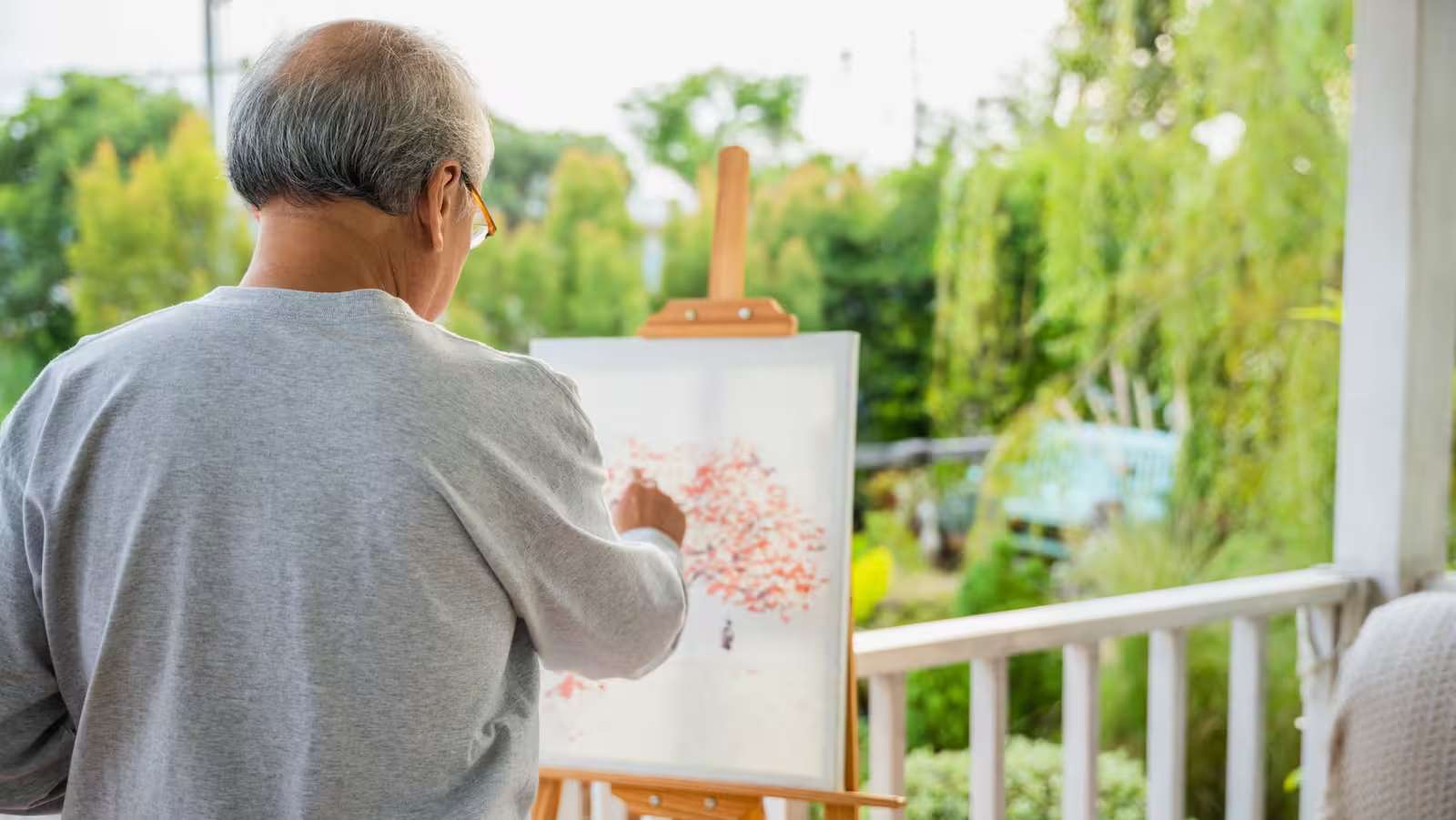
Learning an instrument, painting, photography, woodworking, cooking new cuisines, writing, studying a language, reading, puzzles, and strategy games ask the brain to practice attention, memory, planning, and problem-solving.
The greatest value may come from activities that continue to challenge us rather than those we can perform automatically. Music is a good example: emerging research suggests that instrument training later in life may support working memory and preserve aspects of the brain's auditory system.⁴ The broader lesson is encouraging — we do not have to be accomplished to benefit. Being a beginner can be part of the benefit because it requires patience, adaptation, and new learning.
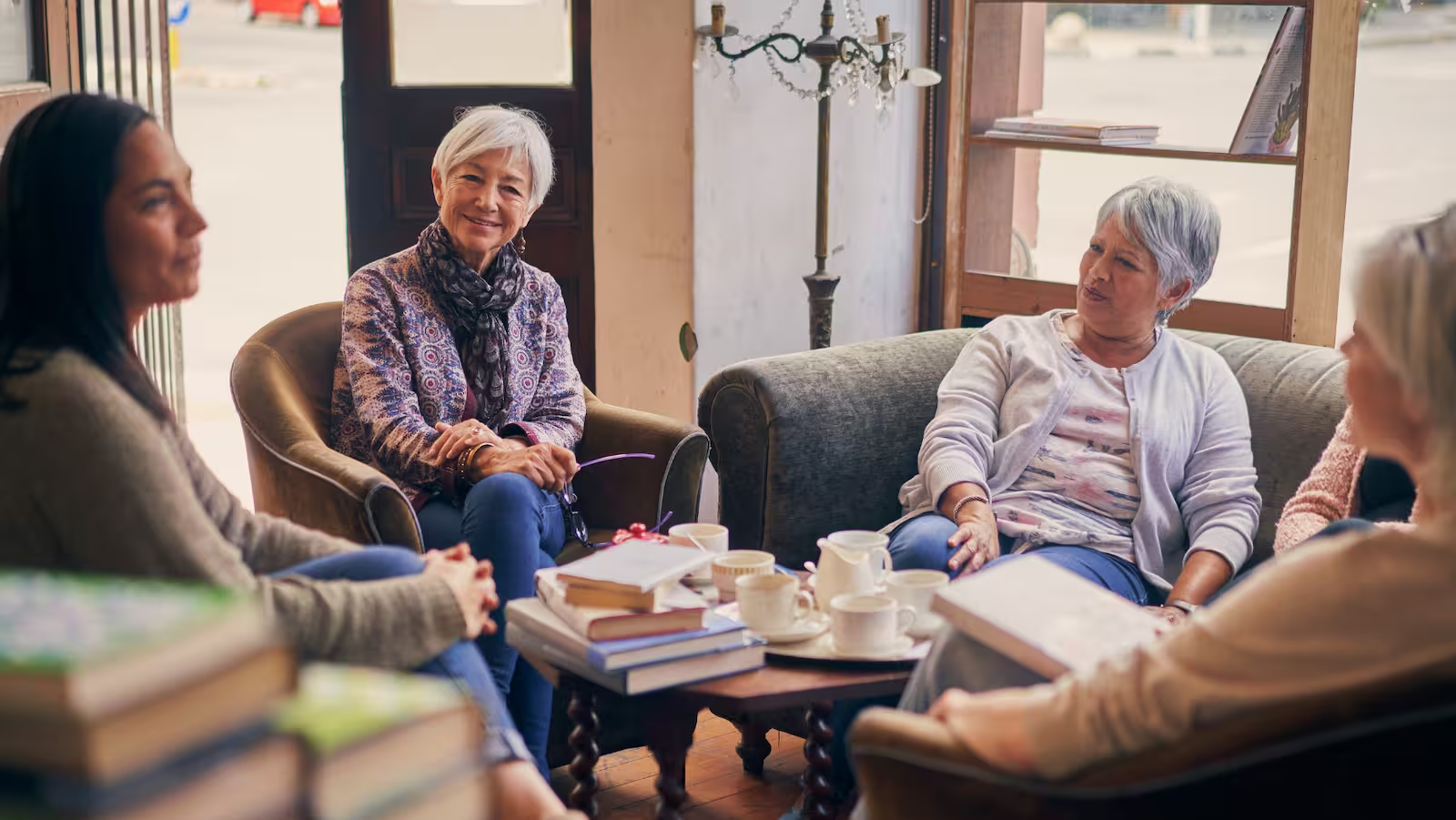
Book clubs, choirs, card groups, community classes, team sports, volunteering, mentoring, and faith- or civic-based activities add something solitary hobbies cannot always provide: regular contact with other people.
That matters during retirement, when everyday interaction with coworkers may decline. Social hobbies create accountability, shared experiences, and a reason to show up. Volunteering and mentoring can be particularly meaningful because they allow us to use decades of experience in service of someone else. A hobby that says "people are counting on me" can strengthen both connection and purpose.

Gardening, birdwatching, fishing, nature photography, and trail walking can combine gentle activity, focused attention, and time outdoors.
Gardening is especially well-rounded: digging and carrying can build strength, routine care encourages consistency, and planning around seasons keeps the mind engaged. A systematic review of horticultural programs for older adults found benefits across physical and psychosocial measures, although results varied by program and study quality.⁵ It is a useful reminder that many of the best hobbies do not fit neatly into one category.
One of the best times to develop a retirement hobby is before retirement. Waiting until the final day of work can place too much pressure on a new activity to immediately replace a career's structure and relationships.
Instead, we can begin with one protected block of time each week, take a class, join a group, or return to something we enjoyed earlier in life. Starting gradually gives us time to discover what fits, build friendships, and establish routines that can expand when our schedule changes.
It can also help to think in terms of a simple "hobby portfolio": one activity that keeps us moving, one that challenges us mentally or creatively, and one that connects us with others or allows us to contribute. The same hobby may satisfy all three. What matters most is consistency, enjoyment, and the willingness to adapt as our interests and physical abilities change.
Retirement planning is ultimately life planning. Financial resources give us choices, but the routines, relationships, and interests we cultivate help determine how meaningful those choices become. By making room for hobbies now — and maintaining them through the transitions ahead — we can support not only how long we live, but how fully we live.
As always, our focus remains on helping you prepare for the future with confidence and providing you with Financial Peace of Mind. We hope that you are having a wonderful summer and look forward to speaking with you again soon.