Economic Update | Sep 14, 2026
Hosted by Andrew Toccaceli, RICP®, MRFC® and Coley Neel, CFA® | W.A. Smith Financial Group


Get a clear look at what you’re paying and how much risk you’re taking. This complimentary review helps identify your portfolio’s costs, risk exposure, and opportunities to better align your investments with your goals — all with no obligation.
Get Started
August brought renewed strength to equity markets after July's uneven results. Technology and growth-oriented companies regained momentum, while small companies and international markets also moved higher.
Participation broadened beyond a handful of mega-cap leaders, supporting a more balanced advance despite continued uncertainty surrounding inflation, interest rates, and geopolitical developments.
Every major equity index in our review advanced during the month. The Nasdaq led as technology recovered, followed by the Russell 2000 and S&P 500.
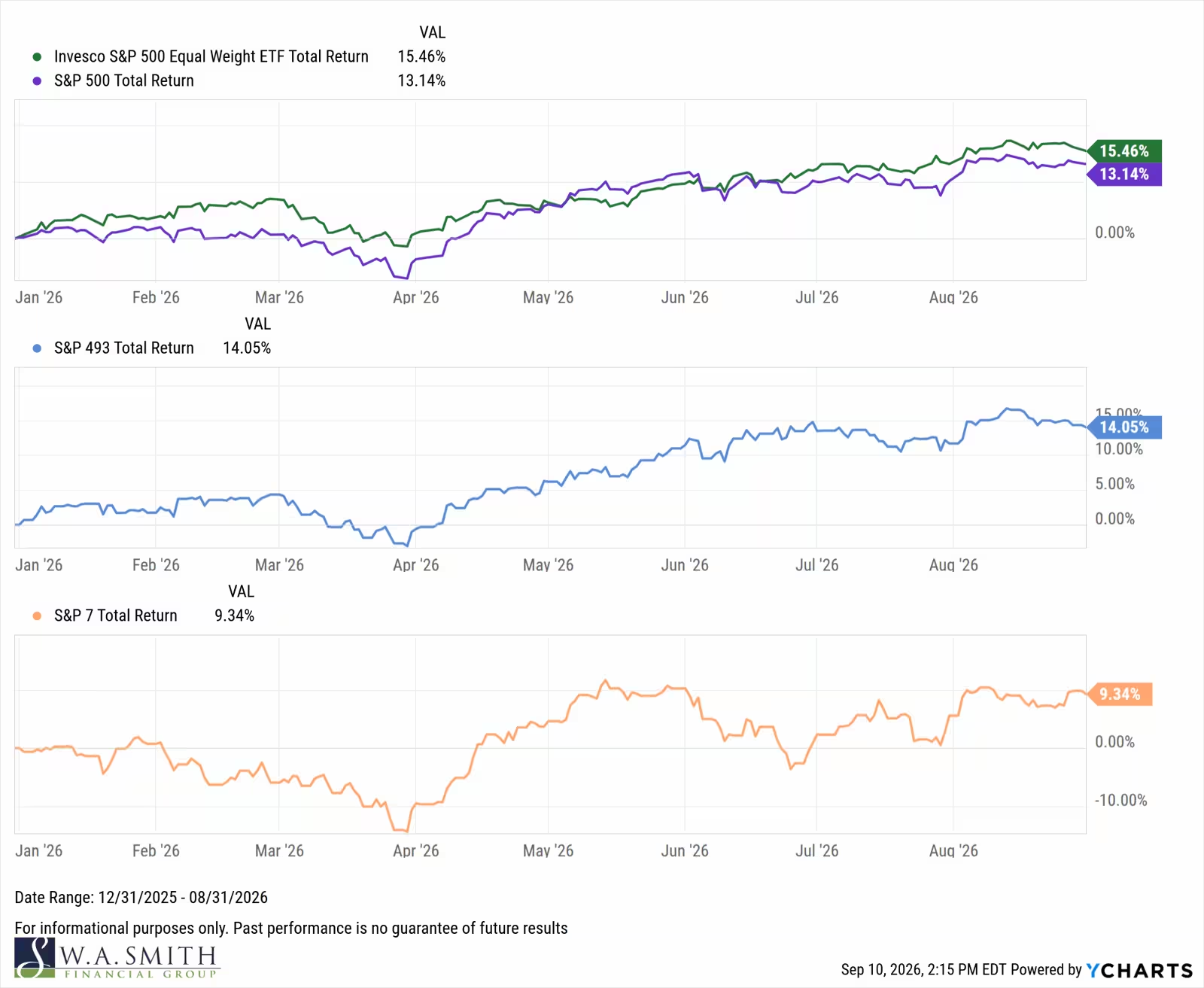
More importantly, the equal-weight S&P 500 remained ahead of the capitalization-weighted index for the year through August. The other 493 companies in the S&P 500 also outpaced the seven largest technology-oriented companies, suggesting the market has become less dependent on its largest constituents.
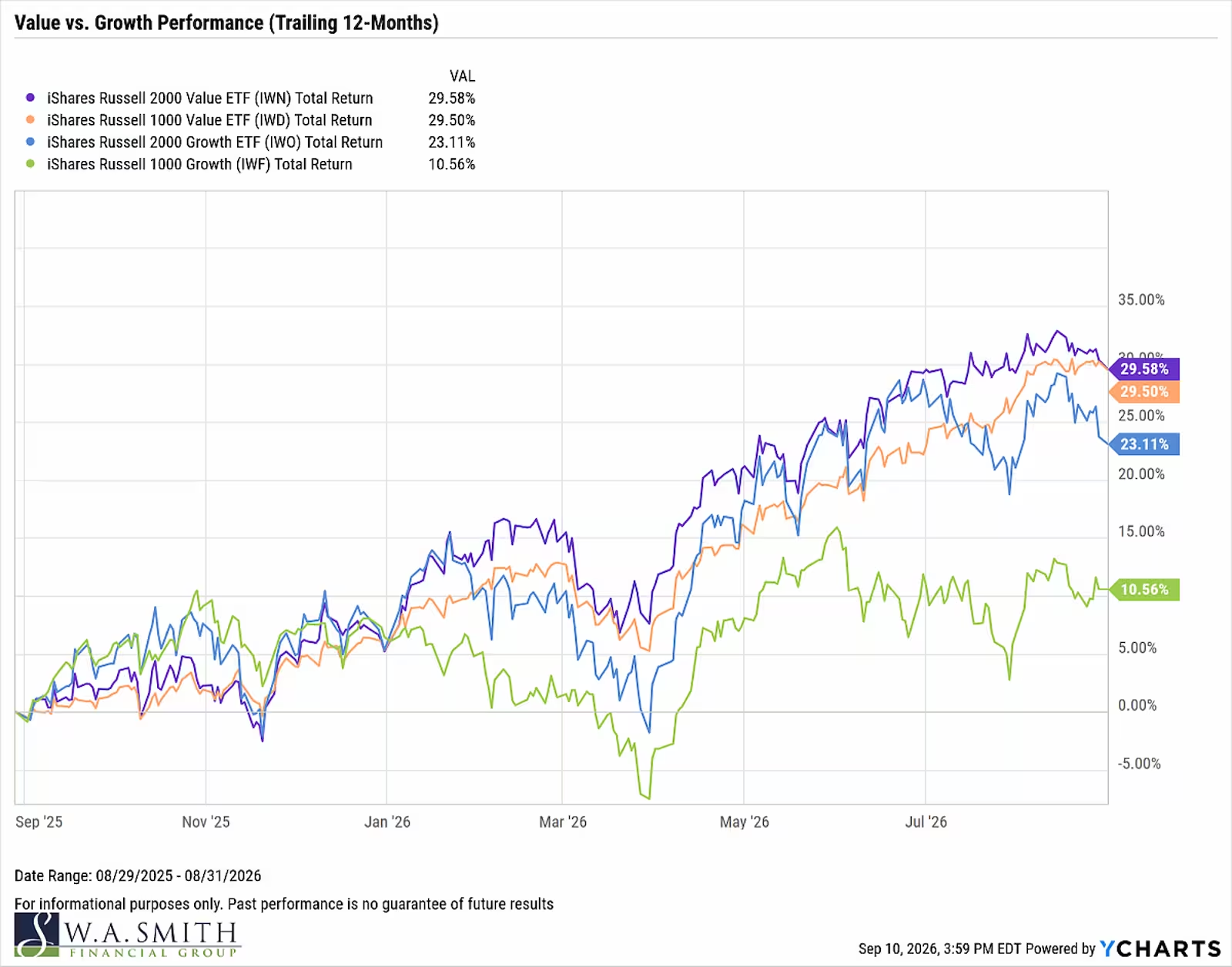
Style leadership shifted again as large-cap growth led August after value held the advantage in July. Small-cap growth and value also advanced, while large-cap value posted a more modest result.
Over the trailing 12 months, however, value remained ahead of growth across both large and small companies. These changing results reinforce the importance of maintaining exposure to both styles.
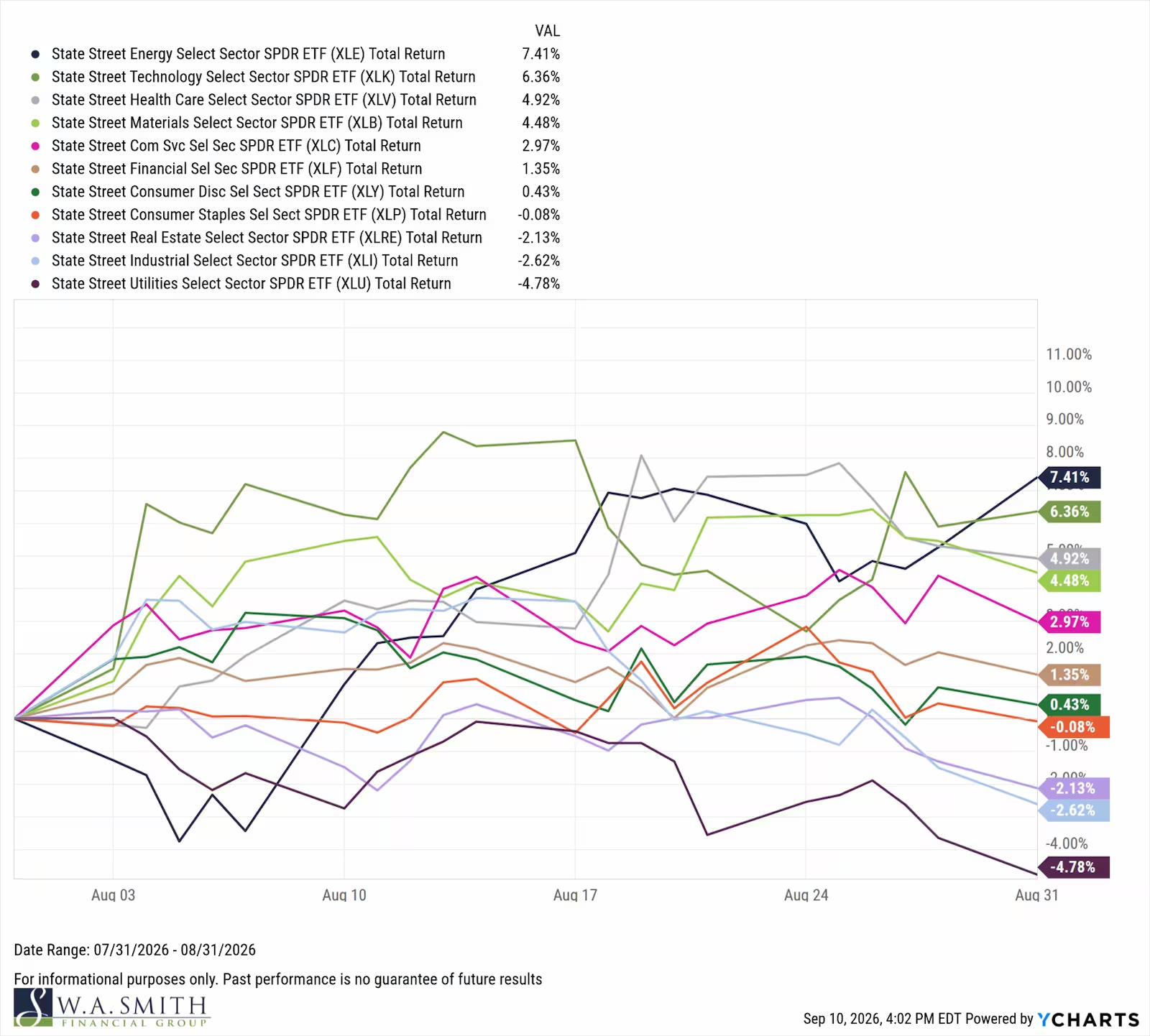
Sector performance was similarly divided. Energy led as oil prices rose, while strong artificial-intelligence-related earnings helped Technology regain momentum. Health Care and Materials also advanced. Utilities, Real Estate, Consumer Staples, and Industrials weakened.
This dispersion shows how changes in growth, inflation, and interest-rate expectations can quickly shift sector leadership.
Artificial intelligence remains an important long-term opportunity, but August again showed why careful selection matters. NVDA's results supported continued spending on data centers, semiconductors, cloud infrastructure, and related equipment. Software companies also recovered as earnings helped offset disruption concerns.
Capital spending remains substantial, and the market increasingly expects companies to demonstrate a return on that investment. We remain constructive while evaluating valuation, execution, and cash-flow durability company by company.
The labor market improved after July's weakness. Nonfarm payrolls increased by 162,000, unemployment remained at 4.1%, and labor-force participation improved modestly to 61.6%.
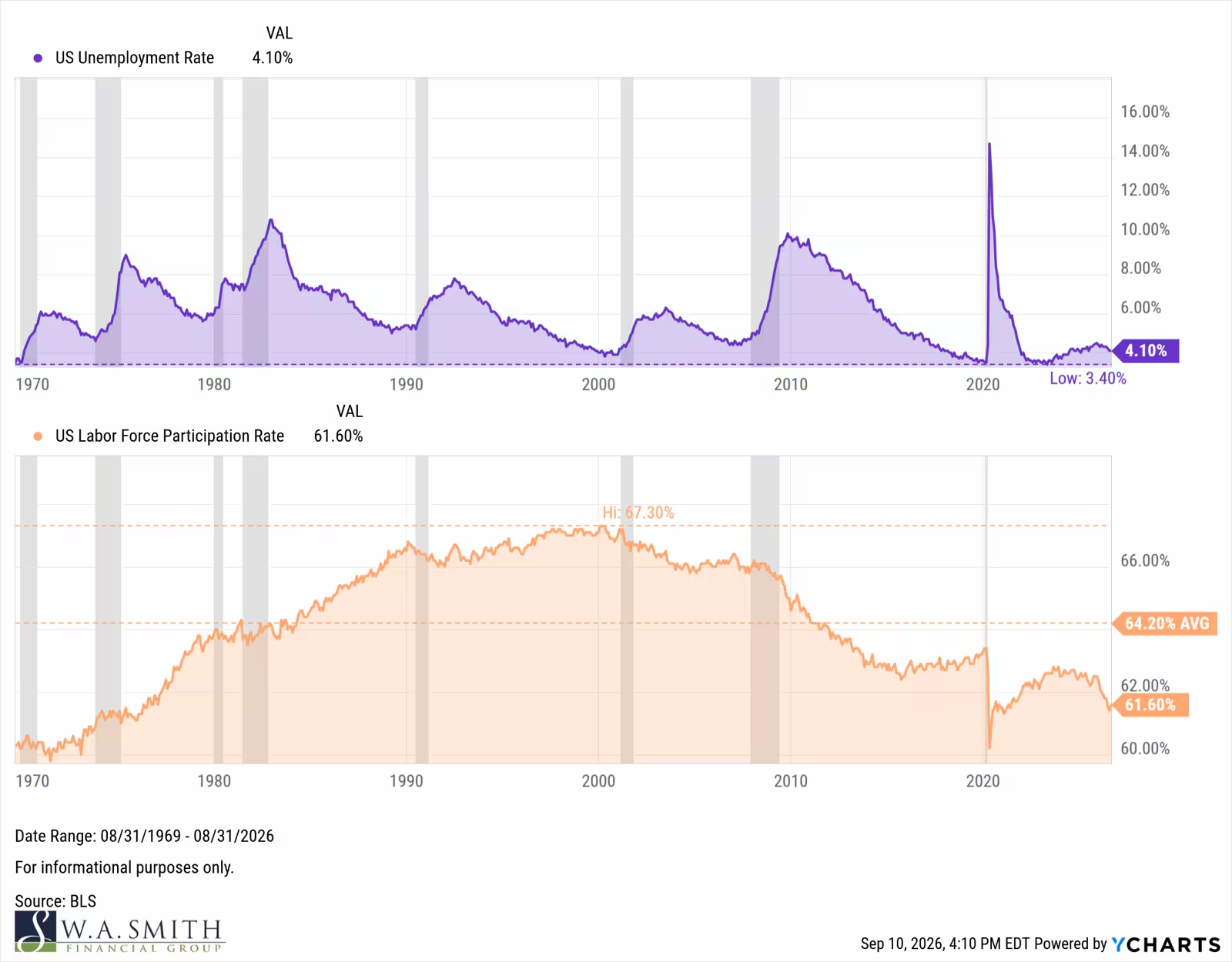
Positive real wage growth continued to support households. These figures eased immediate concerns about a rapid contraction, although uneven payroll growth and participation below its longer-term average still warrant attention.
Household finances remain a risk if growth slows. The personal saving rate stood at 3.0%, household debt approached $18.8 trillion, and debt-service payments consumed 11.3% of disposable income.
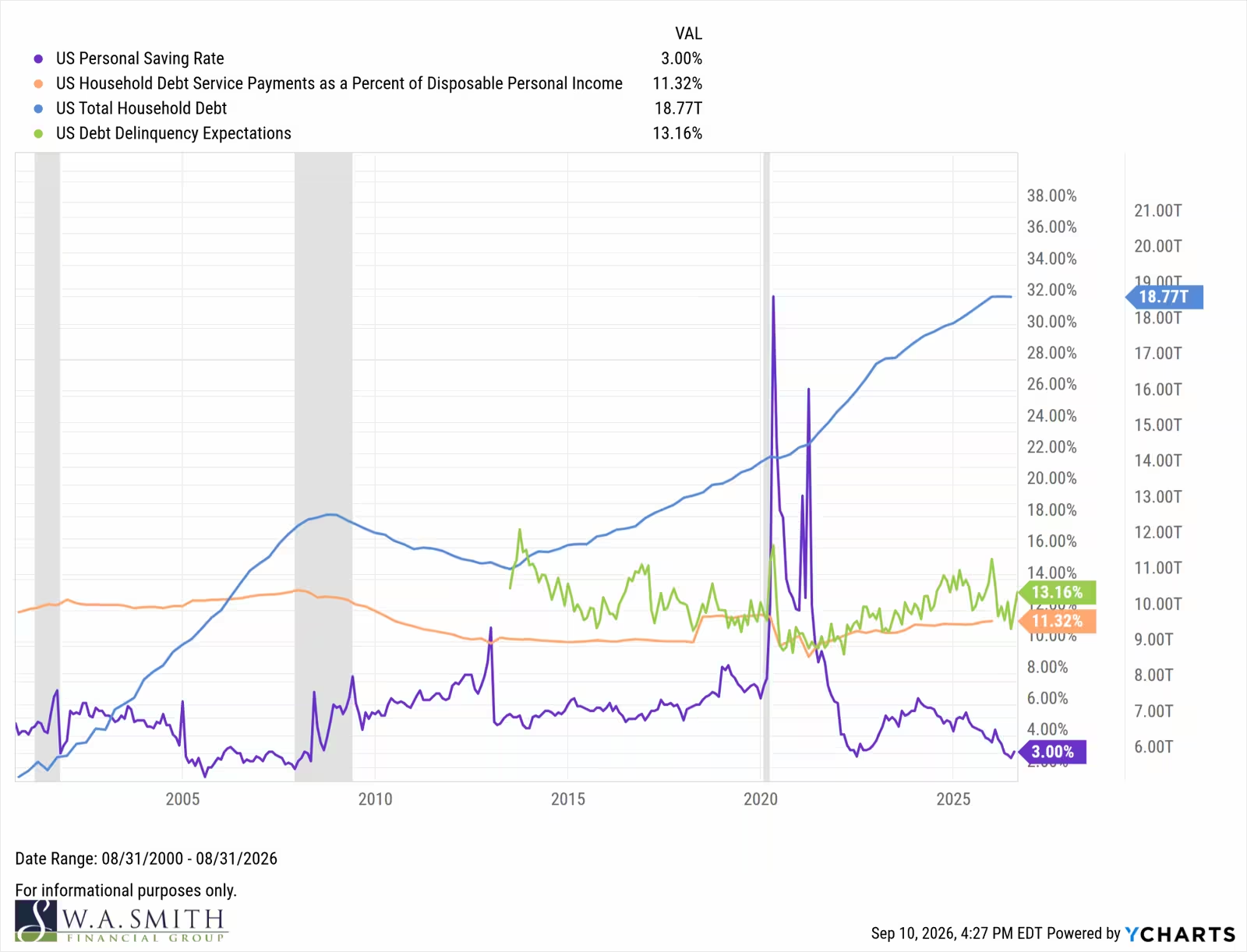
Delinquency expectations also remained elevated. Consumers continue to spend, but limited savings and higher required payments leave many households more sensitive to job losses, slower wage growth, and persistent inflation. We continue to monitor delinquent and nonperforming loans for signs of broader financial stress.
Inflation provided mixed signals. Headline consumer inflation moderated to 3.4% and core inflation to 2.5%, while PCE and Core PCE remained above the Federal Reserve's objective.
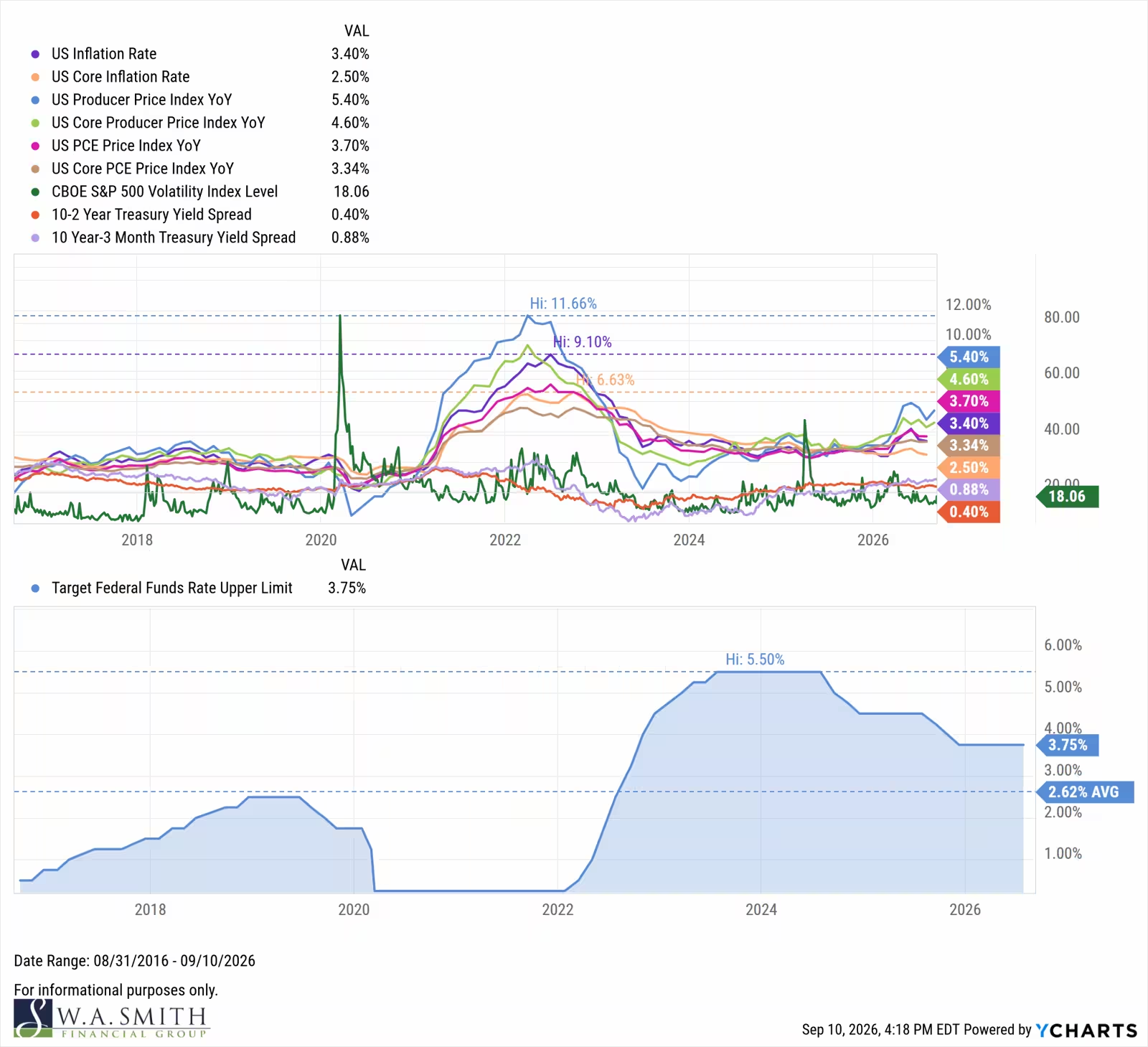
Producer prices were the greater concern, with headline PPI at 5.4% and core PPI at 4.6%. Businesses still face meaningful input-cost pressure that could reach consumers over time. Chair Warsh's Jackson Hole comments reflected this risk, and recent CME FedWatch data have increased the possibility of a rate increase at the September FOMC meeting.
Treasury markets adjusted to the firmer inflation and policy outlook. Yields rose across nearly every maturity, with the largest increases from two through ten years. The curve remained positively sloped but flattened modestly as short and intermediate yields rose faster than longer maturities.
Higher starting yields remain attractive. We believe high-quality intermediate bonds offer a practical balance of income and potential appreciation if rates eventually moderate, without assuming the full sensitivity of long-duration securities. That said, economic uncertainty will likely keep yield volatility elevated.
Energy markets added another layer of uncertainty. Brent crude rose to approximately $106 per barrel, and WTI moved above $94, widening Brent's premium to nearly $12.
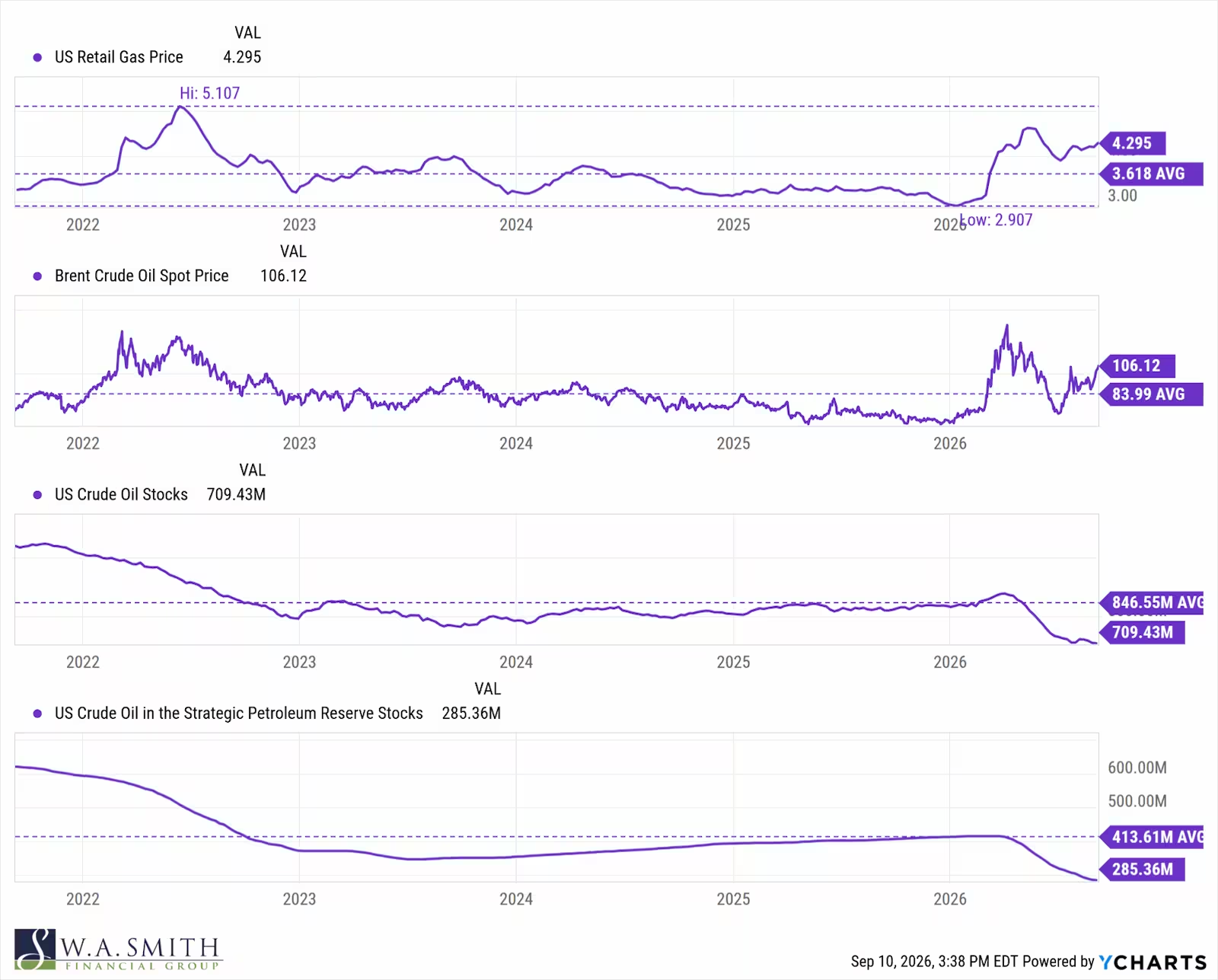
The spread points to greater stress in seaborne markets as the Iran conflict continues to threaten international shipping routes. Meanwhile, total US crude inventories fell to roughly 709 million barrels, and the Strategic Petroleum Reserve declined to about 285 million. This smaller cushion leaves less flexibility if another disruption occurs and raises the risk that energy costs will affect inflation and household spending.
As we approach the end of the third quarter, our Investment Committee continues to evaluate risks and opportunities through our disciplined 5-step due diligence process. August's broader participation was encouraging, but persistent inflation, higher yields, and geopolitical uncertainty require continued selectivity.
We remain focused on companies with durable competitive advantages, healthy balance sheets, dependable cash flow, and management teams capable of executing through changing conditions.
As we have said many times before, our primary objective is to provide you with Financial Peace of Mind.
Market leadership will change, and economic reports will sometimes conflict. Our role is to remain disciplined, keep you informed, and build portfolios around your long-term financial plan rather than short-term headlines. We hope you are enjoying the last weeks of summer and look forward to speaking with you again soon.